Markets Are Adaptation, Too: Rethinking Who Gains and Who Loses from Climate Change in Agriculture
This post is a reproduction of PREFALIM Policy Brief 1.
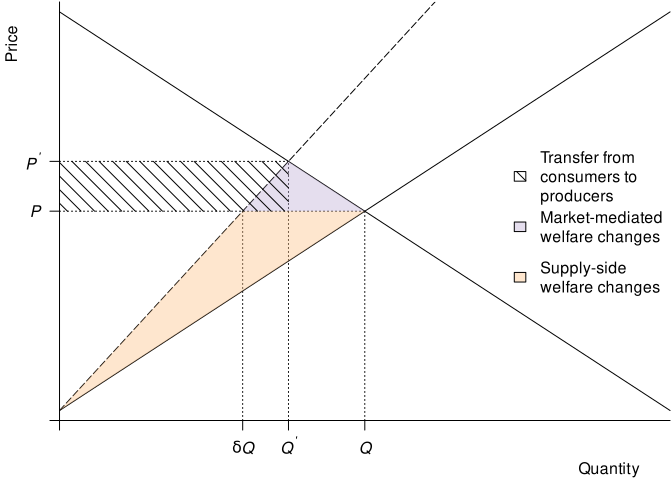
Most of us picture climate change hurting farmers because it hurts yields. We also picture “adaptation” as technology—new varieties, different planting dates, smarter irrigation. This post adds a missing piece: markets are adaptation, too. Because climate shocks are uneven across crops and places, prices move, trade reroutes, and land is reallocated—and once those adjustments occur, winners and losers can look very different from the picture you get from a supply-side perspective, in which prices are kept fixed. Two simple ideas drive the difference. First, foods are not freely interchangeable in people’s diets, so the cost of a typical food basket can rise even if some crops do better under climate change. Second, countries that rely on food imports are exposed when world prices rise, while some large exporters may benefit from higher selling prices despite lower yields. Using a global model, letting prices adjust produces an overall economic loss equivalent to 0.43% of world GDP, whereas the fixed‑price calculation—applied to the same climate shocks—shows a small gain of 0.08%. At the country level, 19 of 50 countries switch sign between the two views, and in 38 of 50 the market‑aware measure is lower than the fixed‑price number. The lesson is straightforward: prices reorganize the impacts of climate change. If you ignore them, you risk getting both the size and the direction wrong.
How International Trade Shaped France’s Carbon Footprint
This post is a reproduction of the English version of the Lettre du CEPII 457.
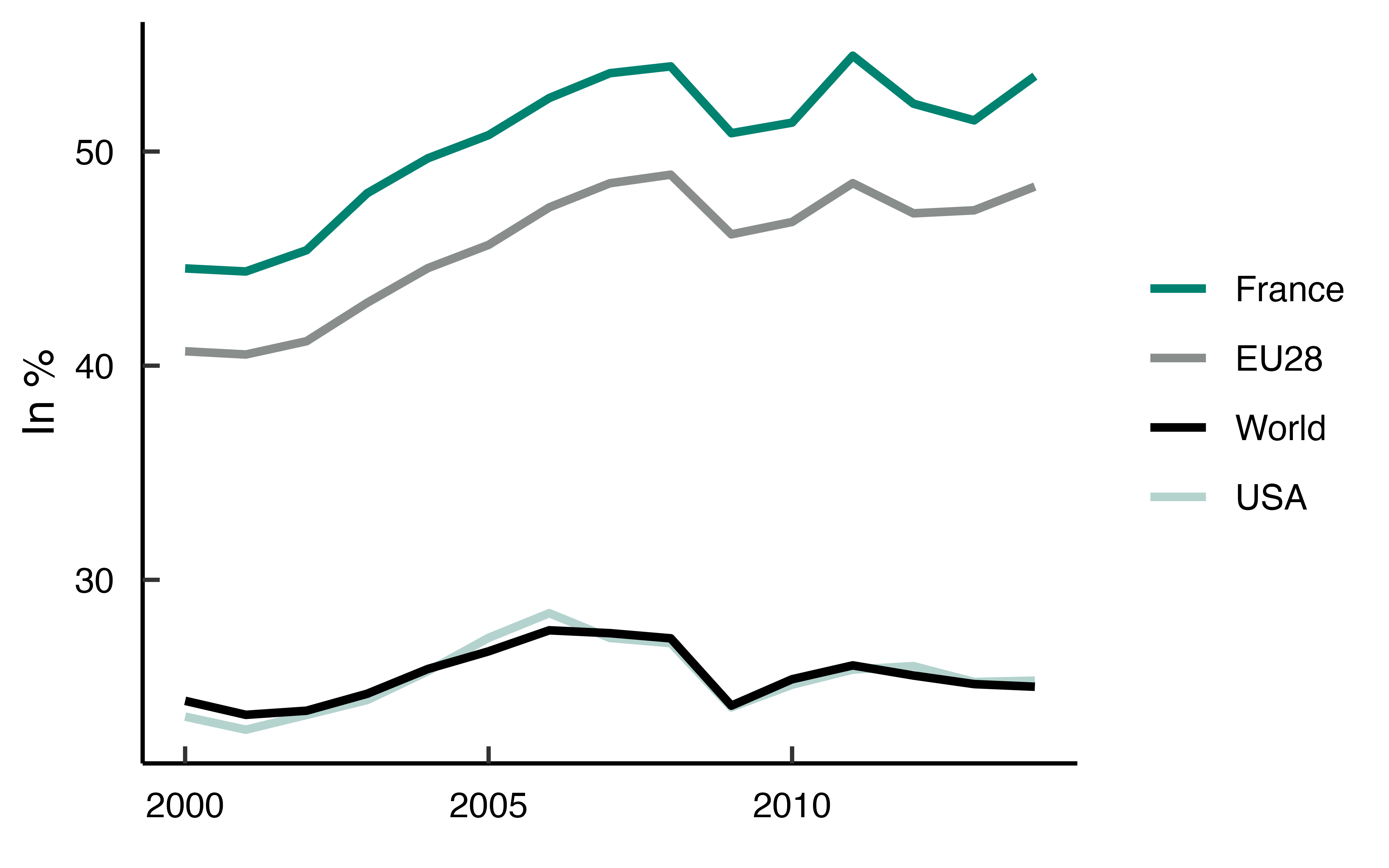
France stands out for the significant role that imports play in the dynamics of its carbon footprint. Between 2000 and 2014, trade openness worsened France’s carbon footprint, in particular because of the rapid growth of Chinese imports until 2008. At the same time, technological progress within France, but especially abroad, led to a modest reduction in the carbon footprint. For a relatively low-emitting country like France, changes occurring outside the national borders play a key role in the evolution of the carbon footprint. This observation highlights the need to coordinate national efforts with international strategies to reduce emissions linked to the production of our trade partners.